
READ MORE BLOGS


ENZYME-BASED SOIL STABILIZATION • Envirotx DCE
What Soil Types Work Best With Enzyme-Based Stabilization?
Enzyme based soil stabilization is highly dependent on soil compatibility. Envirotx DCE can help build a denser, more moisture-resistant base when the soil contains adequate clay, is mixed properly, and is compacted correctly.
This guide helps engineers, county road teams, contractors, and public works supervisors understand which soil types are better candidates, which conditions need caution, and when technical review should happen before application.
Envirotx Technical Blog
What Soil Types Work Best With Enzyme-Based Stabilization?
Enzyme-based soil stabilization works best when the soil has enough reactive clay and supporting aggregate structure to bind into a denser road base. It is not a universal treatment for every soil type. Clay content, gradation, moisture behavior, limestone compatibility, and the amount of silt all matter before application.
For civil engineers, geotechnical teams, county road departments, and contractors, the first question should not be whether enzyme stabilization sounds attractive. The first question should be whether the soil is compatible enough for the treatment to perform as intended.
How Envirotx DCE Uses Soil Chemistry and Compaction
Envirotx DCE is an enzyme-based soil stabilization technology that helps bond soil particles together when it is blended into suitable soils and properly compacted. Envirotx describes the product as a bio-enzymatic stabilizer that reorganizes clay platelets and strengthens the soil matrix as the treated material cures.
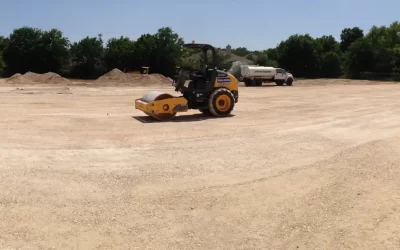
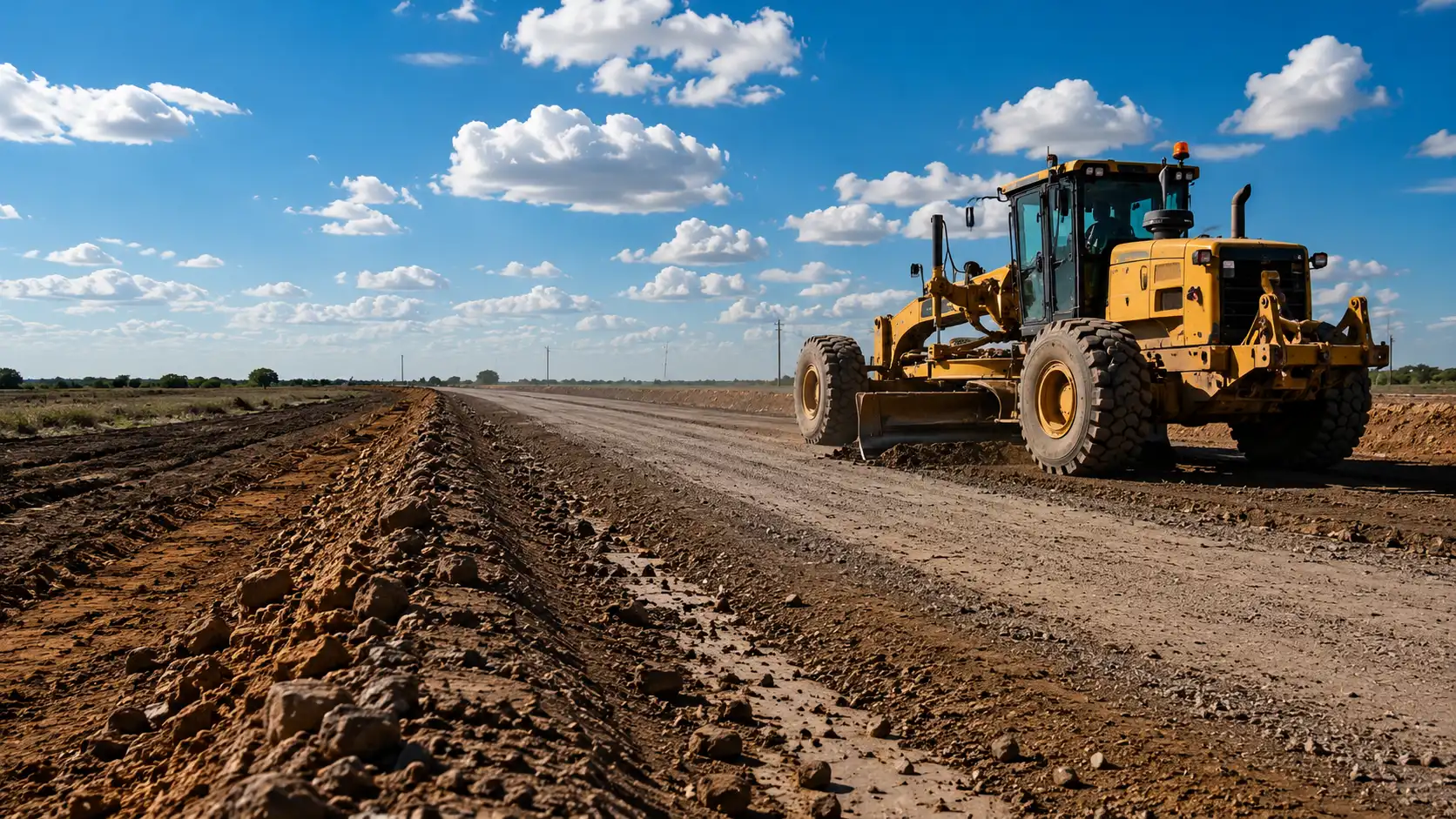
That process depends on field execution. The roadbed must be opened to the required depth, water and DCE must be introduced evenly, the material must be brought near optimum moisture content, and compaction must be completed thoroughly. Poor mixing or weak compaction can leave inconsistent areas even when the soil itself is a candidate.
Clay Content
DCE needs enough compatible clay for the enzyme-based process to support bonding and densification.
Moisture Control
Optimum moisture content helps crews blend, shape, and compact the treated road base more consistently.
Compaction
Compaction is essential because stabilization depends on building a dense, uniform soil matrix.
Soils That Are Usually Better Candidates for DCE
The topic brief identifies a practical baseline: soils should have at least 15 percent clay content for enzyme-based stabilization consideration. Limestone-based soils can also be compatible when they include enough clay, sand, and small rock to bind together into a stable matrix.
The strongest candidates are soils that can be mixed uniformly, shaped, and compacted into a dense base. For roadway teams, that means compatibility is not only a lab question. It is also a construction question: can crews work the material, control moisture, and compact it consistently across the full treated section?
Potentially compatible soil indicators
- At least 15 percent clay content, based on the Envirotx DCE topic guidance.
- Enough sand and small rock for the clay fraction to bind the matrix.
- Limestone-based soils with suitable clay and aggregate structure.
- Material that can be opened, blended, brought to optimum moisture, and compacted.
- Road sections where moisture and drainage can be managed during installation.
Soils That Need Caution Before Enzyme Stabilization
Silt-heavy soils are a common caution point. The topic guidance notes that silt soils are not compatible because water can dissolve the initial hardening. That makes soil identification important before crews mobilize equipment or quote a treatment depth.
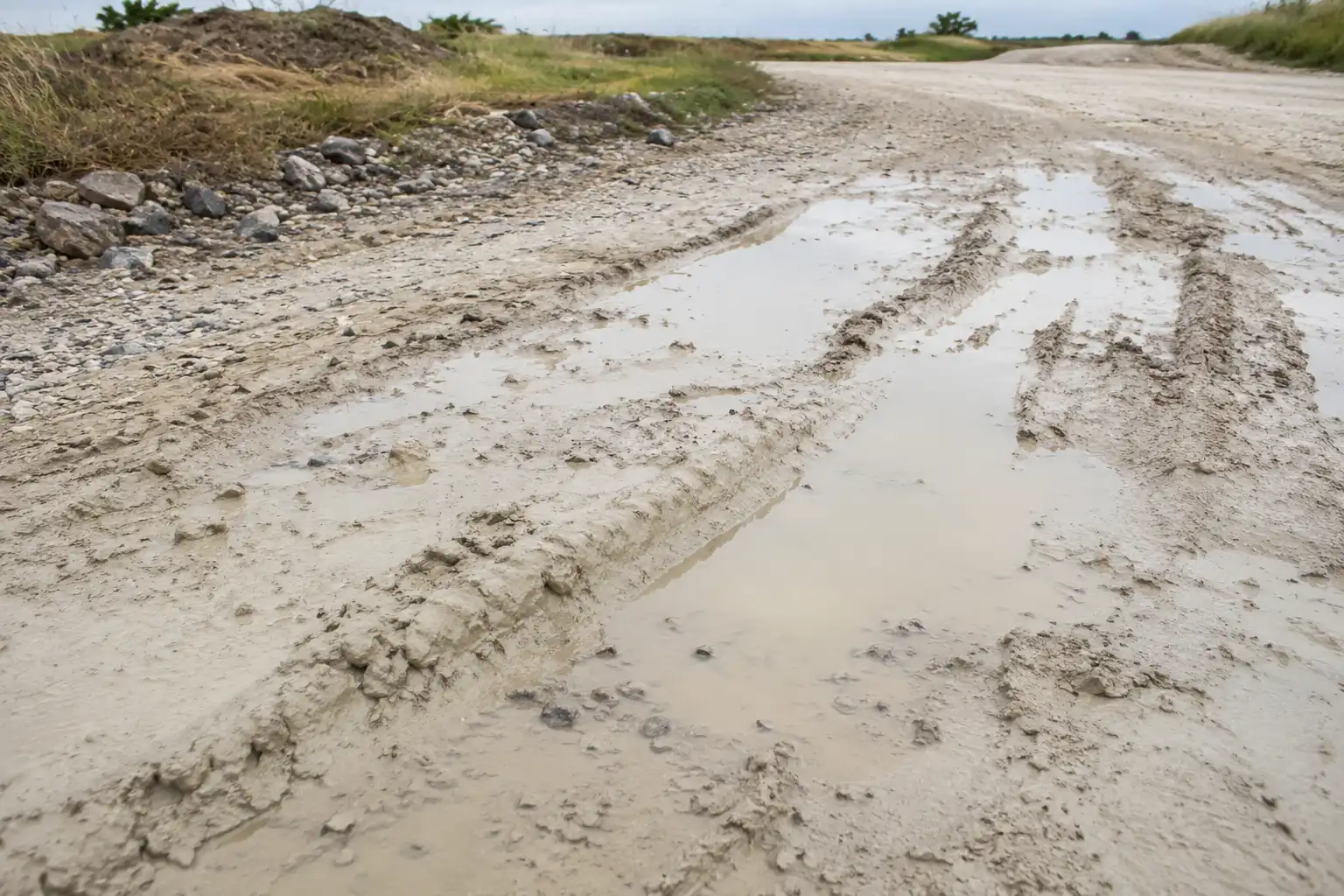
Very loose, poorly graded, highly variable, or drainage-compromised material may also need closer review. Enzyme stabilization is not a shortcut around bad construction conditions. If the road has standing water, uncontrolled runoff, soft spots, organic material, or inconsistent layers, the treatment plan should account for those conditions first.
Why Soil Testing and Field Review Matter
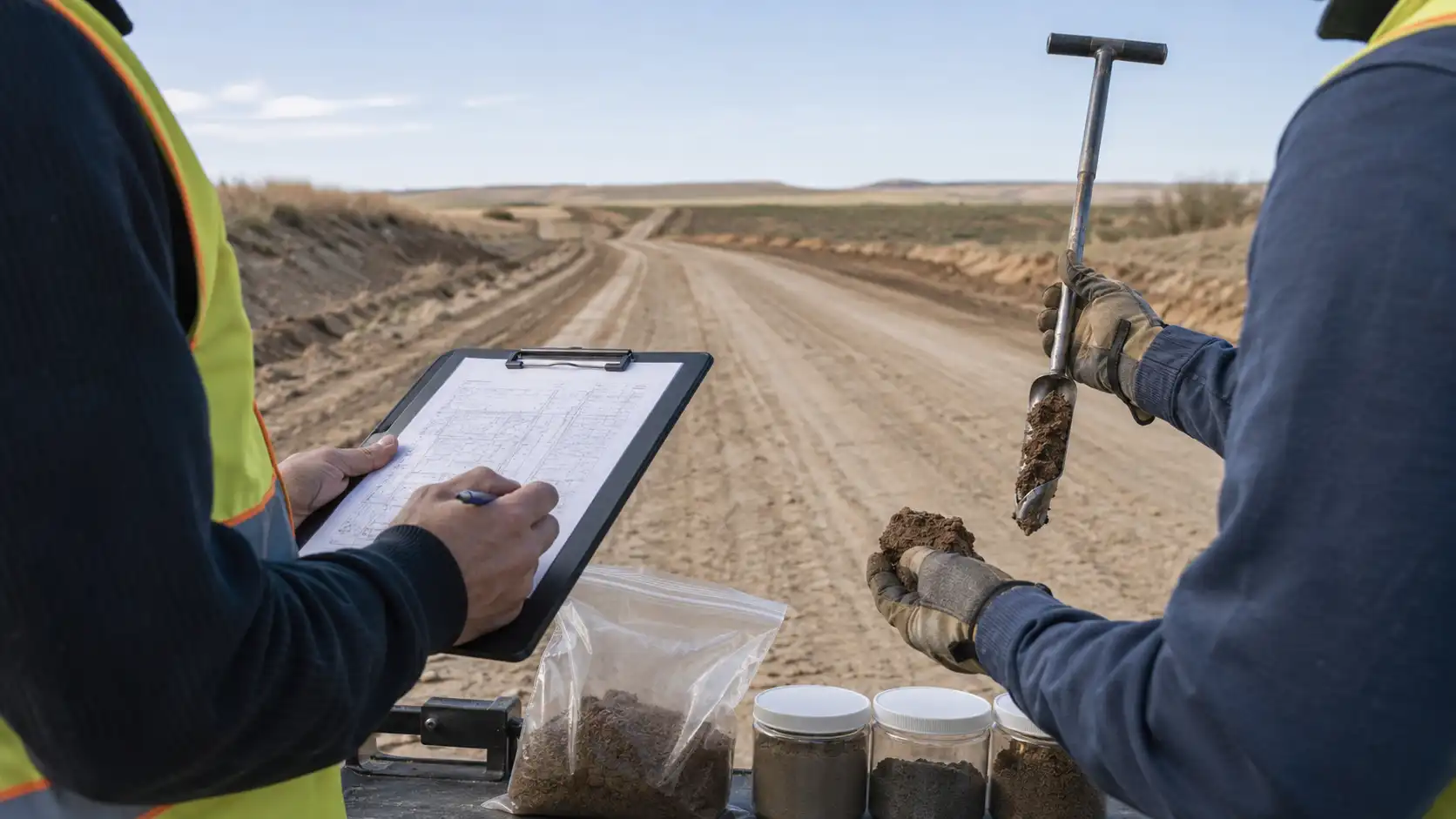
Soil testing helps teams avoid treating a road as if every mile has the same material. Rural roads, oilfield access roads, industrial haul roads, and subdivision roads can change soil type over short distances. A compatible section and an incompatible section may look similar at the surface until moisture, traffic, and compaction expose the difference.
A good review should consider clay percentage, plasticity, gradation, drainage, organic content, depth of treatment, traffic loads, weather window, and compaction equipment. For higher-risk sites, lab testing or project-specific technical review can help confirm whether Envirotx DCE is the right soil stabilizer or whether another stabilization approach should be considered.
Compatibility checklist for road teams
- Confirm soil type and clay content before selecting the stabilizer.
- Check whether silt-heavy areas are present in the treatment zone.
- Review drainage and moisture exposure before application.
- Plan for uniform mixing, finish grading, and thorough compaction.
- Use technical review for sensitive roads, heavy traffic, or variable soils.
How Envirotx Helps Teams Evaluate DCE Fit
Envirotx provides roadway solutions from sub-grade and base systems through surface preservation and repair. For enzyme-based soil stabilization, Envirotx can help county teams, contractors, engineers, developers, oilfield operators, and industrial sites evaluate whether DCE fits the soil and maintenance goal.
Envirotx also provides technical training at no charge, including jobsite, classroom, and on-location sessions. That training matters because soil stabilization performance depends on correct moisture control, application, grading, and compaction as much as product selection.
Frequently Asked Questions About Enzyme-Based Soil Stabilization
What is enzyme-based soil stabilization?
Enzyme-based soil stabilization uses an enzyme treatment to help suitable soils bind into a denser, more stable road base when mixed and compacted properly.
What clay content is recommended for DCE consideration?
The Envirotx topic guidance identifies at least 15 percent clay content as a practical compatibility baseline for DCE consideration.
Can DCE work with limestone-based soils?
DCE can be considered for limestone-based soils when there is enough compatible clay, sand, and small rock to bind into a stable matrix.
Are silt soils compatible with enzyme stabilization?
Silt-heavy soils are not good candidates based on the topic guidance because water can dissolve the initial hardening.
Should soil be tested before using a stabilizer?
Soil testing or technical review is recommended when soil conditions are variable, traffic exposure is high, drainage is uncertain, or the project has sensitive performance requirements.
Confirm Soil Fit Before Choosing a Stabilizer
If your road team is evaluating enzyme-based soil stabilization, Envirotx can help review soil compatibility, moisture conditions, application planning, and whether DCE is the right fit for the project.
Request Technical Data