
READ MORE BLOGS
LIQUID ROAD DEICER • De-Icing / Anti-Icing
Liquid Road Deicer vs. Granular Ice Melt: How Should Crews Choose?
Liquid road deicer and granular ice melt serve different winter maintenance needs. The right choice depends on whether crews are pretreating before a storm, responding after ice forms, or managing high-priority roads, lots, and walkways.
This guide compares the two formats in practical terms for road crews, school systems, commercial property managers, and contractors planning safer winter operations without assuming one product format is always best.
Envirotx Technical Blog
Liquid Road Deicer vs. Granular Ice Melt: Which Should Crews Choose?
Liquid road deicer and granular ice melt both help winter maintenance teams manage snow and ice, but they are used differently. Liquids are often evaluated for anti-icing pretreatment and surface bonding prevention. Granular products are often selected for response work, walkways, parking lots, and situations where crews need a material that can be spread directly onto ice or packed snow.
The right choice depends on the storm, surface, temperature, equipment, storage, traffic, and crew workflow. Envirotx provides liquid and granular de-icing products for roads, walkways, and lots, so the conversation should start with the operating need rather than a one-size-fits-all answer.
When Liquid Road Deicer Makes Sense
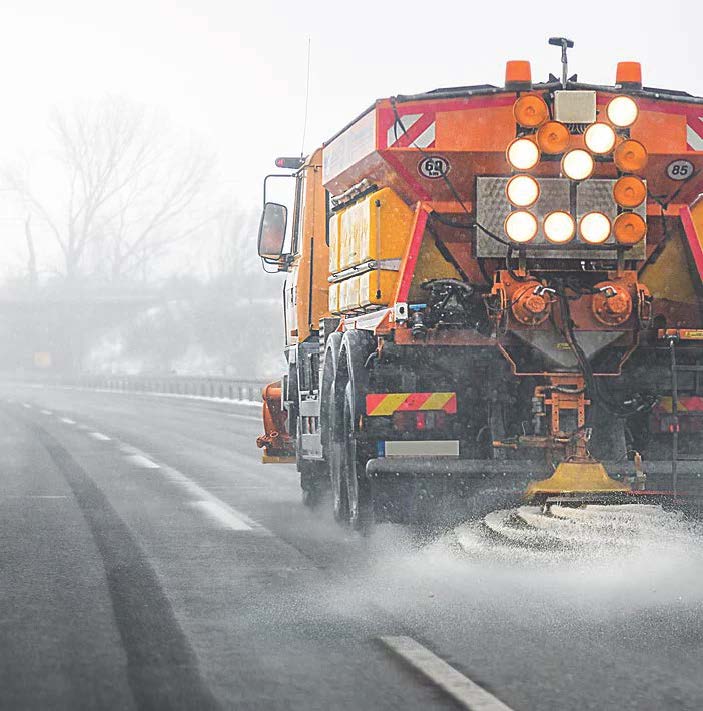
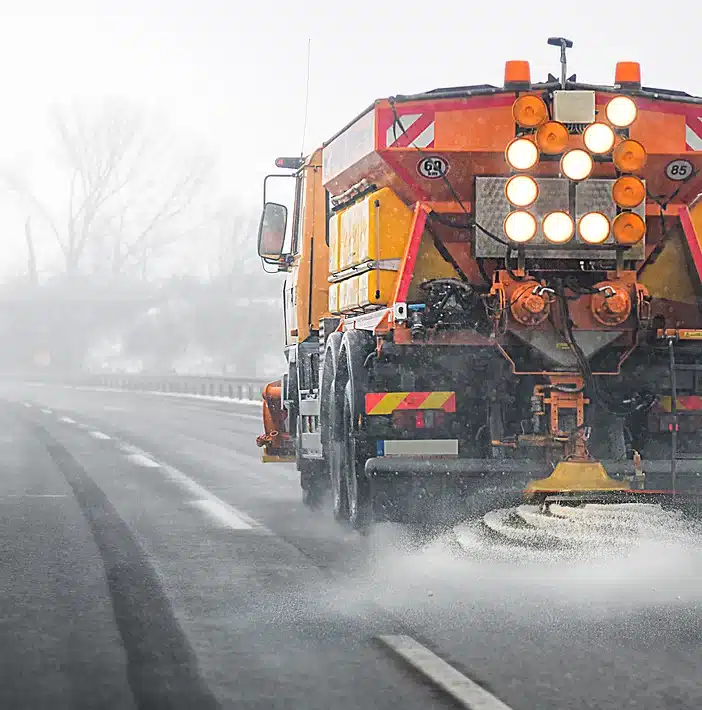
Liquid road deicer is commonly considered when crews want to treat pavement before ice bonds tightly to the surface. In anti-icing work, timing matters. Applying the right liquid material before or early in a storm can help reduce the bond between frozen precipitation and the pavement, making later removal more manageable.
Liquids can also support consistent coverage on routes where the agency or contractor has the right tanks, pumps, spray bars, storage practices, and trained operators. For public works departments, schools, and commercial sites, that equipment readiness may be the deciding factor.
Pretreatment Timing
Liquids are useful when crews can act before ice bonds hard to the surface.
Route Coverage
Liquid application can fit planned road and lot programs with the right equipment.
Operational Planning
Storage, weather timing, application rate, and traffic exposure should be planned before storms arrive.
When Granular Ice Melt Makes Sense
Granular ice melt is often easier to deploy for response work because crews can spread it after ice or snow has already formed. It can be especially practical on sidewalks, steps, building entrances, parking lots, loading areas, school facilities, and other surfaces where targeted application matters.
Granular products can also be easier for smaller properties or contractors that do not operate liquid spray equipment. The tradeoff is that spread pattern, product selection, storage, surface type, and storm conditions still matter. Using more material is not automatically better if it does not fit the temperature, traffic, or surface need.
Granular ice melt is often useful for
- Walkways, steps, entries, ramps, and pedestrian areas.
- Parking lots, loading zones, and commercial property access points.
- Spot treatment after ice has already formed.
- Crews without liquid application equipment.
- Sites where storage and spreading workflows are already set up for bagged or bulk granular material.
Liquid vs. Granular De-Icing Comparison
A winter maintenance plan should match the product format to the job. Liquid and granular de-icing agents can both be valuable, but they solve different operational problems.
How crews can compare the formats
- Timing: Liquids often fit pretreatment and early-storm work. Granular products often fit active response and spot treatment.
- Surface: Liquids may fit roadways, lanes, and large paved areas. Granular products are often practical for walkways, entries, lots, and targeted areas.
- Equipment: Liquids require tanks, pumps, storage, and application hardware. Granular materials require spreaders, storage, and material handling.
- Traffic: Vehicle movement, plowing plans, and public access can affect which format stays useful on the surface.
- Storm variability: Temperature, precipitation type, timing, and refreeze risk should guide product selection.
Envirotx's de-icing and anti-icing materials are positioned to fight ice on contact, stop ice from bonding to surfaces, and prevent water from freezing. Product-specific temperature, application rate, and performance details should be reviewed before publication or procurement decisions.
Why Many Winter Programs Need Both Formats
A city, school system, contractor, or commercial property may need liquid deicer for one part of the storm plan and granular ice melt for another. For example, a route crew may pretreat high-priority pavement before a storm, while a facility crew uses granular material around entrances after traffic and foot movement create packed ice.
This is why the liquid road deicer vs. granular ice melt decision should be tied to operations. Buyers should define the surfaces they maintain, the equipment they already have, the response window they need, and how crews will handle storage, application, cleanup, and retreatment.

How Envirotx Helps Crews Choose De-Icing Products
Envirotx provides liquid and granular de-icing products for roads, walkways, and lots, including bulk sodium, designer ice melt, brine additives, and liquid de-icers. The goal is to help road crews, school systems, commercial property managers, and contractors select materials that match their storm plan and site conditions.
Envirotx can also help teams think through practical winter variables: surface type, route priority, storm timing, available equipment, storage, expected traffic, application method, and product-specific guidance. That review is especially important for agencies or property teams updating their winter program before the first storm.
Frequently Asked Questions About Liquid and Granular De-Icing
Is liquid road deicer better than granular ice melt?
Liquid road deicer is not automatically better than granular ice melt. Liquids often fit pretreatment and planned route work, while granular products often fit response work and targeted areas.
When should crews use liquid deicer?
Crews should consider liquid deicer when they can treat before or early in a storm and have the equipment, storage, and timing needed for liquid application.
When should crews use granular ice melt?
Crews should consider granular ice melt for active de-icing, pedestrian surfaces, parking lots, building entrances, spot treatment, and sites without liquid application systems.
Can one winter maintenance program use both?
Yes. Many programs can use liquids for anti-icing or route pretreatment and granular products for response work, walkways, lots, and targeted follow-up.
What should buyers confirm before ordering de-icing products?
Buyers should confirm surface type, equipment, storage, storm timing, temperature range, application guidance, traffic needs, and whether product-specific performance claims have been reviewed.
Build the De-Icing Plan Around the Storm and Surface
Envirotx can help road crews, school systems, commercial properties, and contractors compare liquid and granular de-icing products based on storm timing, surface type, equipment, storage, and operating goals.
Talk to a Roadway Specialist