
READ MORE BLOGS

FADED ASPHALT • Pavement Preservation
How to Fix Faded Asphalt: Repair, Preserve, or Resurface?
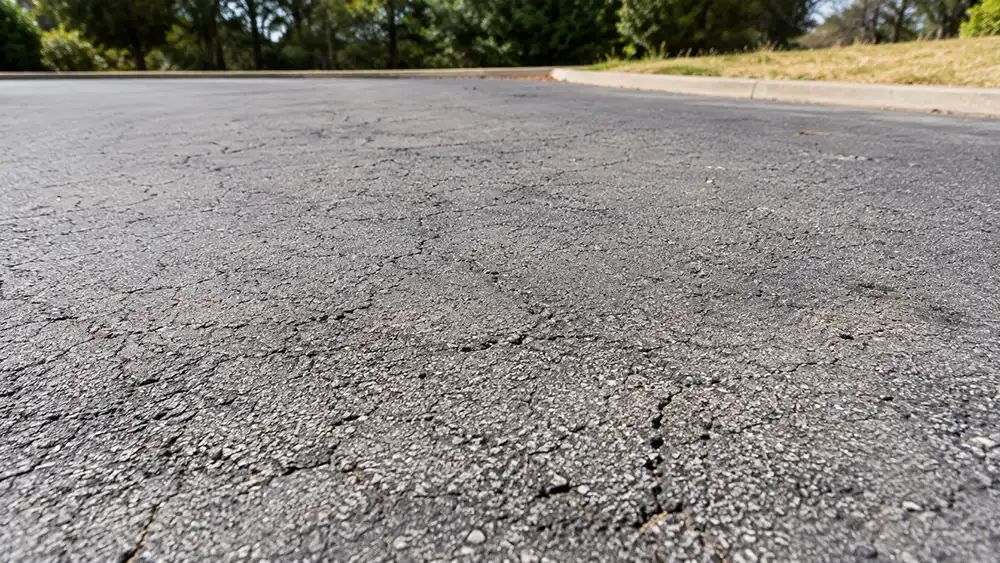
To fix faded asphalt, start by evaluating the pavement rather than simply covering the gray color. A serviceable surface with oxidation and light wear may be a candidate for preservation, while open cracks, potholes, drainage problems, depressions, or widespread breakup usually require repair before any surface treatment is considered.
Condition Before Color
What Is the Right Way to Fix Faded Asphalt?
Why Does Asphalt Fade From Black to Gray?
Asphalt fades as its surface is exposed to sunlight, oxygen, weather, and traffic. The binder at the surface ages and dries, while aggregate becomes more visible. This process is commonly called asphalt oxidation.
Fading does not automatically mean failure, but it is a reason to inspect the surface. Aging asphalt may become more vulnerable to wear, raveling, and cracking. The practical question is whether the pavement is still sound enough to preserve.
What gray asphalt can tell you
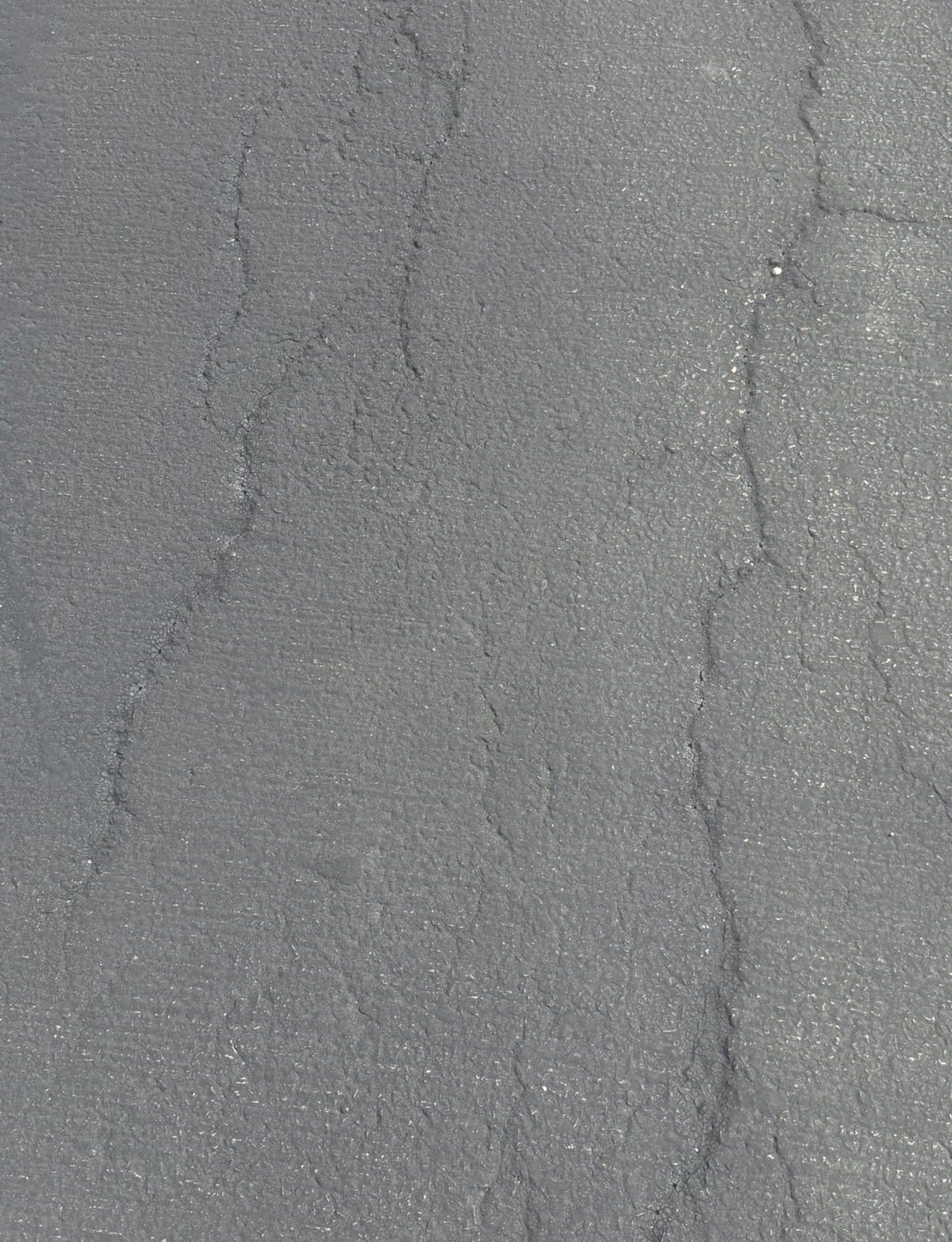
- Uniform fading: Often indicates surface aging and weather exposure.
- Loose stones: May indicate that surface material is beginning to separate.
- Standing water: Points to drainage conditions that need attention.
- Widespread cracks or movement: Suggests a problem beyond appearance.
What Should You Inspect Before Treating Faded Asphalt?
Before choosing a treatment, walk the area and document visible distress. Inspect after rainfall when possible because ponding can reveal drainage problems that are easy to miss on a dry surface.
Faded asphalt condition checklist
- Is the fading uniform, or are some areas loose or damaged?
- Are cracks isolated, or open, branching, and widespread?
- Are there potholes, ruts, depressions, or failed patches?
- Does water drain away or collect in low areas?
- Is the surface contaminated by oil, dirt, or vegetation?
When distress is extensive or its cause is unclear, ask a pavement professional whether the surface needs localized repair, preservation, an overlay, or deeper rehabilitation.
How to Fix Faded Asphalt Based on Its Condition
Fixing faded asphalt is a sequence rather than a single coating step.
1. Clean the surface and expose its true condition
Remove dirt, vegetation, loose aggregate, and debris so cracks and weak areas are visible. A clean surface also supports consistent treatment application.
2. Correct drainage and moisture-entry problems
Clear blocked drains and investigate ponding or water entering through failed edges. A surface treatment will not correct the slope or settlement causing water to collect.
3. Complete needed crack, patch, and edge repairs
Cracks may need cleaning and sealing, while potholes and failed patches may require removal and replacement. Allow repairs to cure as required before treating the surrounding pavement.
4. Preserve serviceable, oxidized asphalt
If the pavement remains intact, a preservation treatment may help address fading, early oxidation, and environmental surface wear. Consider surface condition, weather, application, curing, and traffic control.
5. Resurface or reconstruct pavement with deeper failure
Widespread interconnected cracking, rutting, settlement, repeated patch failure, or a weak base requires professional evaluation. The appropriate work may include an overlay, full-depth repair, drainage correction, base repair, or reconstruction.
Talk to a Roadway Specialist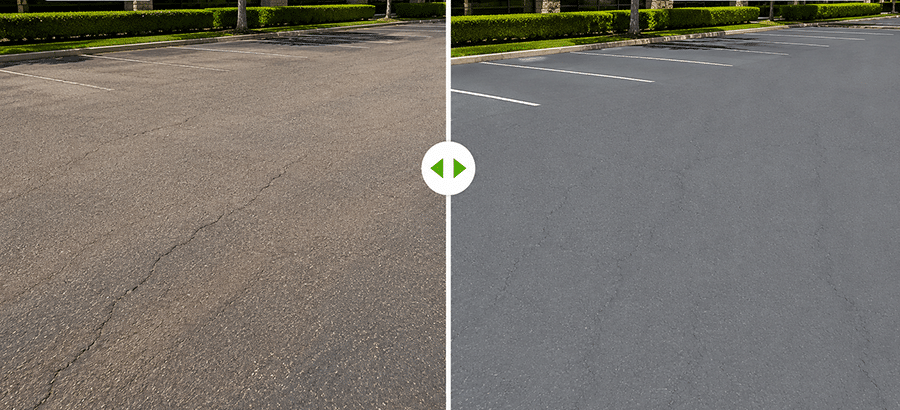
When Does EnviroBLACK Fit a Faded Asphalt Project?
EnviroBLACK is an advanced emulsified fog seal and polymer-modified asphalt emulsion designed for preservation, visual restoration, and breathable surface protection. It is intended for serviceable asphalt that is faded or oxidized.
EnviroBLACK is designed to integrate with asphalt rather than function only as a cosmetic layer. According to Envirotx product information, it restores a deep black finish, helps protect against environmental wear, and allows moisture vapor to escape.
Application options include high-volume airless spray, mechanical squeegee, brush, and rubber-blade methods. Envirotx states that EnviroBLACK is designed to dry in less than one hour under suitable conditions, but actual dry time depends on weather, surface condition, application method, and site conditions.
EnviroBLACK does not replace structural repair, correct a failed base, flatten ruts, fill potholes, or solve drainage defects. Those issues must be addressed separately.
Frequently Asked Questions About Faded Asphalt
Can faded asphalt be made black again?
Yes, a suitable surface treatment can restore a darker, more uniform appearance when the asphalt is in serviceable condition. The pavement should be inspected, cleaned, and repaired as needed before treatment so a color change does not hide unresolved defects.
Will a fog seal repair cracks or potholes?
No. A fog seal is a surface preservation treatment, not a crack repair, pothole patch, or structural rehabilitation method. Those defects should receive the appropriate repair before a fog seal is considered for the surrounding pavement.
How do I know whether EnviroBLACK is appropriate?
EnviroBLACK may be appropriate when asphalt is faded or oxidized, remains serviceable, and needs visual restoration plus breathable surface protection. Share photos, distress locations, drainage concerns, traffic demands, surface area, and scheduling needs with Envirotx for fit guidance.
Treat the Pavement Condition, Not Just the Color
Faded asphalt is a reason to inspect and plan. If the pavement is still serviceable, Envirotx can help determine whether EnviroBLACK fits the surface condition, weather window, and traffic schedule.
Talk to a Roadway Specialist