
READ MORE BLOGS

MINING ROADS • Soil Stabilization
Mining Road Soil Stabilization: A Practical Guide
Mining road soil stabilization improves the material beneath an unpaved haul or access road so it can better withstand traffic, moisture, and surface wear. The goal is to create a denser, more stable road structure that holds its shape and requires fewer reactive repairs.
For mine managers, maintenance leaders, engineers, and contractors, the right treatment depends on the road material and operating conditions. This guide explains where stabilization fits, how it differs from temporary dust suppression, and how Envirotx DCE and TOP-SEAL technologies address different mining-road needs.
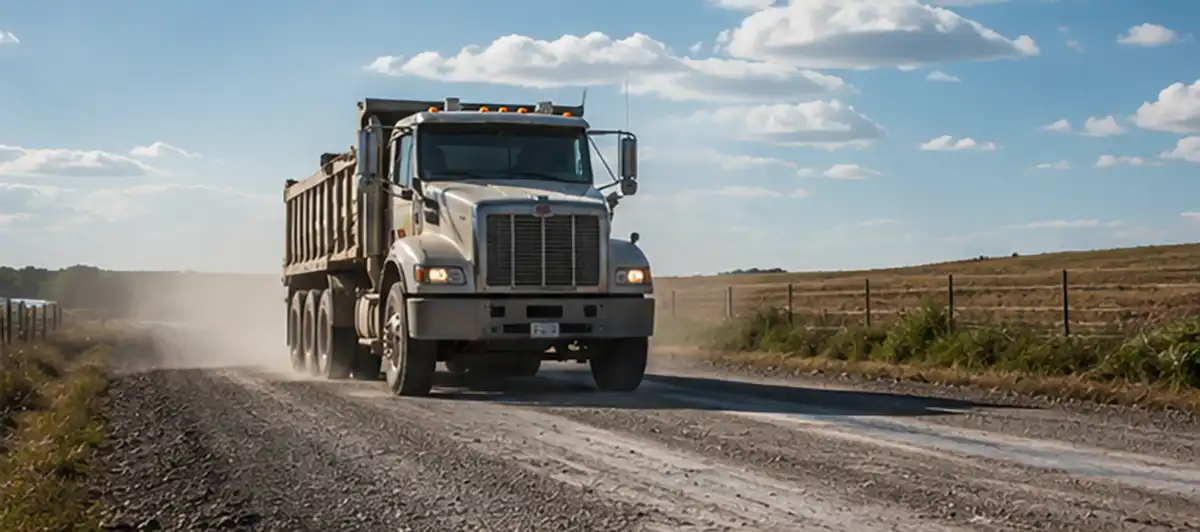
Stronger Haul and Access Roads
What Is Mining Road Soil Stabilization?
Mining road soil stabilization is the process of improving the behavior of the soil or aggregate used in a haul road, service road, or site-access road. Depending on the selected technology, stabilization can improve particle bonding, compaction, density, moisture resistance, or surface integrity.
That distinction matters because a mining road is a working asset. Haul trucks, loaders, water trucks, service vehicles, and maintenance equipment all depend on a consistent running surface. When the road loses shape or strength, the operation must devote more labor, equipment time, water, and aggregate to keeping it usable.
Improve the Road Structure
Stabilization is used to create a denser or better-bound base that is less likely to shift under repeated traffic.
Control Fines and Dust
Holding fine particles within the road matrix can reduce surface material loss and the need for repeated dust-control passes.
Limit Moisture Damage
A suitable treatment can help reduce water penetration and the softening, erosion, and deformation that follow.
Why Do Mining Roads Deteriorate So Quickly?
Mining roads deteriorate when traffic demand exceeds the road material's ability to remain dense, drained, and stable. Heavy wheel loads can displace weak or wet material, while dry traffic can loosen and remove the fines that help hold an unpaved surface together.
Common mining-road failure mechanisms
- Weak or moisture-sensitive soils: The subgrade or base loses support as moisture conditions change.
- Rutting and soft spots: Repeated loads deform material that lacks adequate strength, density, or drainage.
- Washboarding and potholes: Traffic and loose surface material create recurring roughness that grading may only temporarily correct.
- Dust and fines loss: Dry traffic lifts small particles from the road, weakening the surface matrix over time.
- Erosion and runoff: Uncontrolled water removes material and can undermine the shape and consistency of the road.
These problems are connected. For example, a road that sheds fines in dry weather may become increasingly open and permeable. When rain arrives, water can enter the road structure more easily, and weak areas may rut or pothole under traffic. Grading restores the profile, but it does not necessarily correct the material or moisture problem that caused the failure.
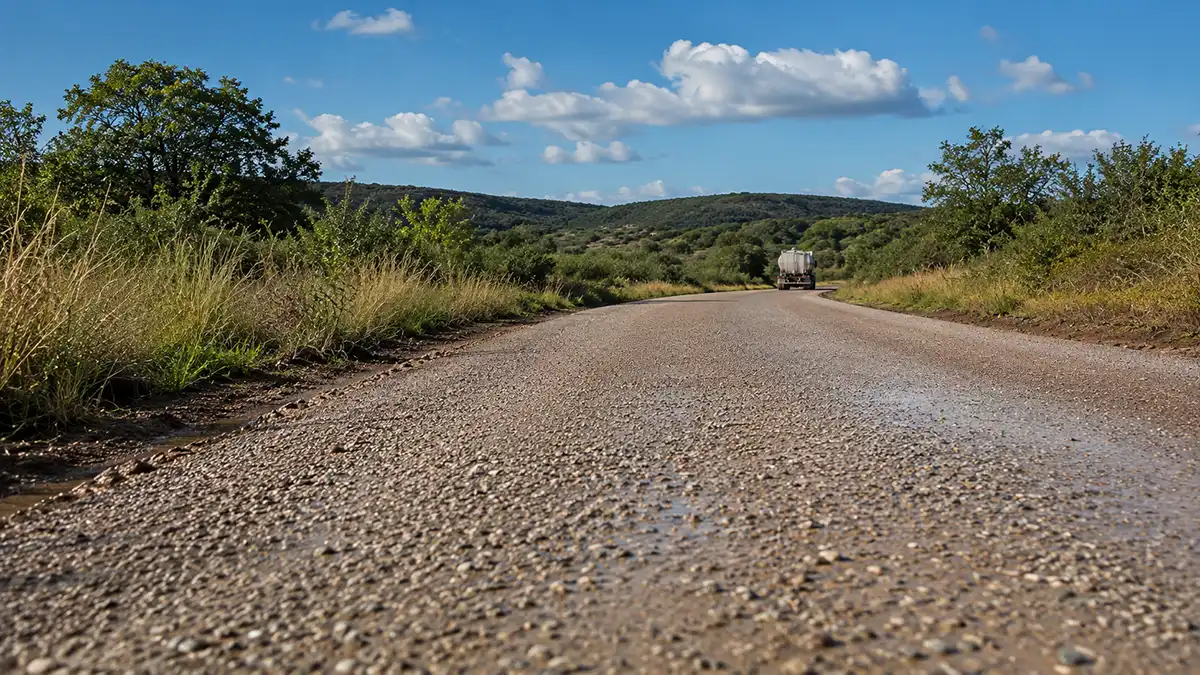
How Can Soil Stabilization Reduce Mining Road Maintenance?
Soil stabilization can reduce maintenance demand by addressing the conditions that trigger repeated work. If the treated road holds its density, retains fines, and better resists moisture, crews may be able to extend the interval between grading, aggregate replacement, watering, and localized repairs.
The operational value is broader than a single maintenance line item. A more consistent running surface can reduce interruptions caused by road repair and give maintenance teams a more predictable asset to manage. Actual results depend on soil suitability, drainage, construction quality, traffic, climate, and the treatment selected, so project-specific evaluation is essential.
Discuss Your Mining Road ConditionsFewer Recurring Surface Repairs
A better-bound road matrix can help slow the return of washboarding, potholes, loose aggregate, and rutted wheel paths.
Less Material Loss
Keeping fines and aggregate in place can reduce the need to continually replace material displaced by traffic, wind, or water.
More Efficient Dust Control
Treating the source of fines loss can reduce reliance on watering alone, although site conditions determine the appropriate program.
Stabilization does not replace sound road design or routine inspection. Crown, drainage, ditches, cross-drains, material gradation, lift thickness, moisture conditioning, and compaction still affect performance. The treatment works as part of that system, not as a substitute for it.
Which Envirotx Technology Fits a Mining Road?
Envirotx supplies both enzyme-based and liquid-polymer soil stabilization technologies. They do not solve every road problem in the same way. The starting point is to define whether the project needs in-depth improvement of suitable soil, surface and base binding, dust control, reduced permeability, or a combination of those outcomes.
Envirotx DCE for suitable clay-containing soils
Envirotx DCE is an enzyme-based soil stabilizer designed to improve natural soil bonding. When it is blended uniformly into soil with adequate clay content and the material is properly moisture-conditioned and compacted, the treatment creates a denser, harder base with improved resistance to moisture and traffic-related distress.
Envirotx reports ASTM D2166 testing in which treated soil reached 1.8 times the strength of untreated soil after seven days and up to 10 times after 28 days. Those figures describe the reported test conditions; they are not a guarantee for every mine site or soil. Representative material evaluation and construction control are necessary before using laboratory results for project expectations.
TOP-SEAL WHITE and BLACK for polymer stabilization
TOP-SEAL WHITE and TOP-SEAL BLACK are water-dilutable, non-petroleum-based polymer emulsions for road-base, access-road, and site stabilization. TOP-SEAL WHITE is designed to bind the base into a solid yet flexible mass, helping address dust, erosion, moisture penetration, permeability, and base failure. TOP-SEAL BLACK forms a layered coating that hardens into an independent surface and helps limit water and air penetration.
Envirotx states that these polymer products can be diluted and applied without specialized equipment. The appropriate product and application approach still depend on the existing material, desired treatment depth, surface objective, traffic, weather, and site logistics.
What Should a Mine Evaluate Before Stabilizing a Road?
A useful evaluation starts with the failure mechanism, not the product name. The project team should document where the road fails, when the problem appears, what materials are present, how water moves through the corridor, and which maintenance activities consume the most resources.
Mining road stabilization checklist
- Road function: Identify whether the segment serves haul trucks, service traffic, plant access, yards, ramps, or another operating need.
- Traffic demand: Review vehicle types, loading, speed, turning, braking, and areas where traffic is concentrated.
- Material properties: Evaluate soil type, clay content, gradation, plasticity, moisture response, and available aggregate.
- Drainage: Inspect crown, ditches, runoff paths, ponding, erosion, and sources of water entering the road structure.
- Failure pattern: Separate dust and loose-surface problems from deeper rutting, soft subgrade, washouts, or recurring potholes.
- Construction resources: Confirm the equipment, water, mixing, grading, and compaction capacity available for installation.
- Performance target: Define what success means, such as fewer grading passes, better wet-weather access, less dust, or longer surface integrity.
A trial section can help teams confirm constructability and observe how the treated material responds under actual site traffic and weather. Project specifications, treatment rates, moisture targets, compaction requirements, and acceptance criteria should be established with qualified project personnel and the product supplier for the specific road.
How Envirotx Supports Mining Road Stabilization
Southwest Envirotx Partners, LLC supplies roadway construction and maintenance technologies for public and private infrastructure, including mining, oilfield, and industrial operations. For mining roads, Envirotx can help teams connect the observed failure pattern and available construction process to an appropriate dust-control or soil-stabilization technology.
That support includes reviewing the intended use, product information, application considerations, and technical questions that should be resolved before field installation. Envirotx also offers technical training for roadway and site technologies, giving project teams a practical resource when planning and executing the work.
The right objective is not simply to apply a stabilizer. It is to build a road-management strategy around material compatibility, correct installation, drainage, inspection, and the mine's actual operating demands.
Frequently Asked Questions About Mining Road Soil Stabilization
What is the difference between haul road stabilization and dust control?
Haul road stabilization improves how the road material binds, compacts, carries traffic, or resists moisture. Dust control focuses on reducing airborne fines at the surface. Some projects need both, but they should not be treated as interchangeable objectives.
Can soil stabilization eliminate mining road maintenance?
No. Stabilization can reduce the causes and frequency of recurring maintenance, but roads still require drainage management, inspection, and repairs appropriate to traffic and weather. Performance also depends on material suitability and installation quality.
Which soil stabilizer is best for a mining haul road?
The right stabilizer depends on the soil, clay content, gradation, moisture, traffic, drainage, and desired outcome. Envirotx DCE is designed for suitable clay-containing soils, while TOP-SEAL polymer products provide options for binding, dust control, moisture resistance, and base or surface treatment.
Does Envirotx DCE work in every soil?
No. Envirotx DCE requires adequate clay content and proper blending, moisture conditioning, and compaction. The site material should be evaluated before the technology is selected or performance targets are established.
What equipment is used to apply mining road stabilizers?
Equipment depends on the product and treatment depth. Envirotx DCE installation can involve ripping or reclaiming the road, applying the product in water, finish grading, and compaction. TOP-SEAL is water-dilutable and can be applied using conventional road-maintenance equipment, including a water truck, according to the project plan.
How should a mine measure whether stabilization is working?
The project should use site-specific measures tied to its objective. These may include maintenance frequency, dust-control demand, rutting or pothole recurrence, wet-weather access, material replacement, and the condition of a defined trial section over time.
Build the Stabilization Plan Around the Road
A mining road treatment should match the material, failure pattern, traffic, drainage, and maintenance objective. Envirotx can help your team evaluate enzyme-based and liquid-polymer stabilization options and identify the technical questions to resolve before field application.
Talk to a Roadway Specialist