
READ MORE BLOGS
GRAVEL ROAD DUST CONTROL • Soil Stabilization
Why Gravel Road Dust Keeps Coming Back
Gravel road dust control is not only about improving visibility or reducing complaints. When dust keeps returning after grading, watering, or short-term treatment, it often points to a deeper surface problem: the road is losing fines, weakening its surface binding, and becoming harder to maintain.
For county road departments, municipalities, and public works directors, recurring dust can be a warning sign that the road surface is not holding together under traffic, weather, and moisture changes. Understanding why dust comes back helps teams choose a better maintenance strategy instead of repeating the same temporary fix.
Surface Binding Problems
Why Does Gravel Road Dust Keep Coming Back?
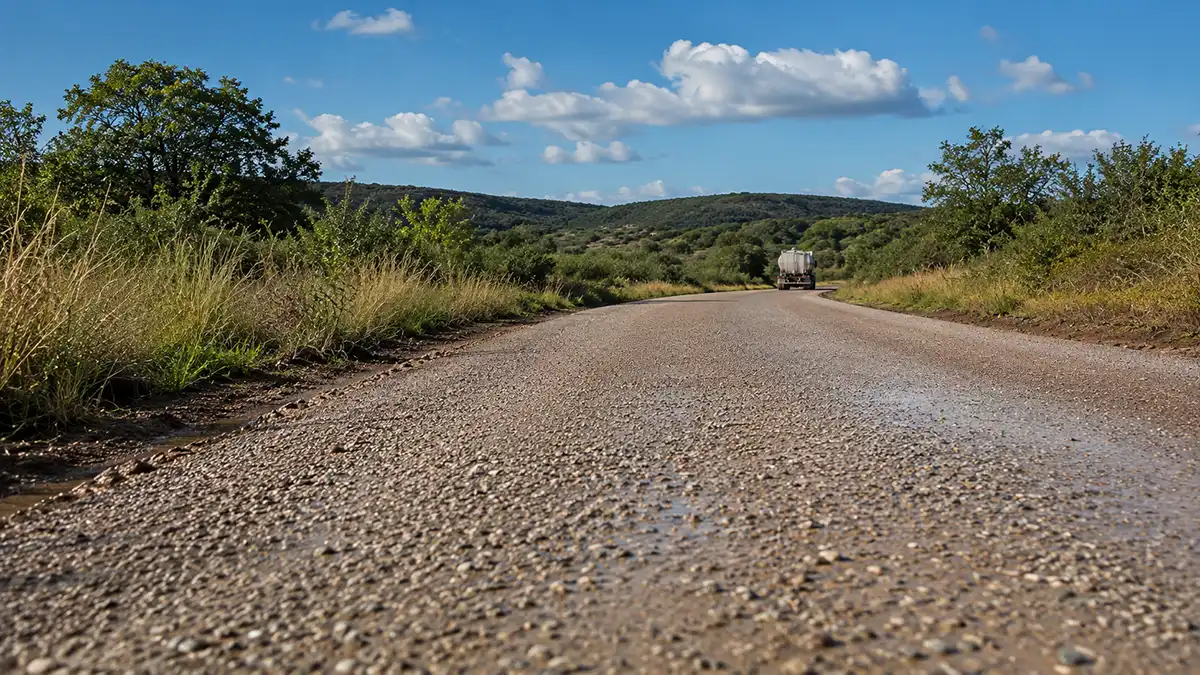
Gravel road dust keeps coming back because the fine particles that help bind the surface are being loosened, displaced, or carried away. Traffic, dry weather, wind, drainage issues, and repeated grading can all contribute to fines loss and surface instability.
On an unpaved road, the surface needs a balanced mix of aggregate and fines. Larger aggregate provides structure, while smaller particles help fill voids and hold the surface together when moisture and compaction are managed correctly. When those fines become airborne dust, the road loses part of the material that helps it stay tight and stable.
Traffic Loosens the Surface
Repeated vehicle movement can break the surface bond, especially on dry roads with weak compaction or exposed loose fines.
Dry Conditions Release Fines
Without enough moisture or binding strength, fine particles lift off the road surface and become airborne dust.
Water Can Make It Worse
Poor drainage, erosion, and wet-weather softening can weaken the surface before it dries and starts dusting again.
That is why dust complaints often show up alongside other maintenance problems, including washboarding, rutting, loose aggregate, muddy shoulders, potholes, and repeated blade work. Dust is visible, but it is rarely the only issue.
Dust Is Often a Sign of Fines Loss and Weak Surface Binding
Fines are the smallest particles in the road surface. They help fill the spaces between larger aggregate and support a tighter, more compacted surface. When those fines leave the road as dust, the surface becomes more open, loose, and vulnerable to water and traffic damage.
This creates a maintenance loop. The road gets dusty, crews grade it, the surface temporarily looks better, and then traffic and dry weather pull more fines out of the road. Over time, the surface may become harder to shape and more expensive to keep in acceptable condition.
What recurring dust may indicate
- The gravel surface is losing the fine material needed for binding.
- The surface is not compacting tightly enough to resist traffic and weather.
- Water is entering or moving through the road base too easily.
- Repeated grading is restoring shape but not solving the binding problem.
- The road may need a stabilization approach, not only a dust suppression pass.
For public works teams, this distinction matters. Treating dust as a visibility issue can lead to short-term responses. Treating dust as a sign of fines loss and surface instability leads to better questions about gradation, drainage, compaction, binding, and long-term maintenance frequency.
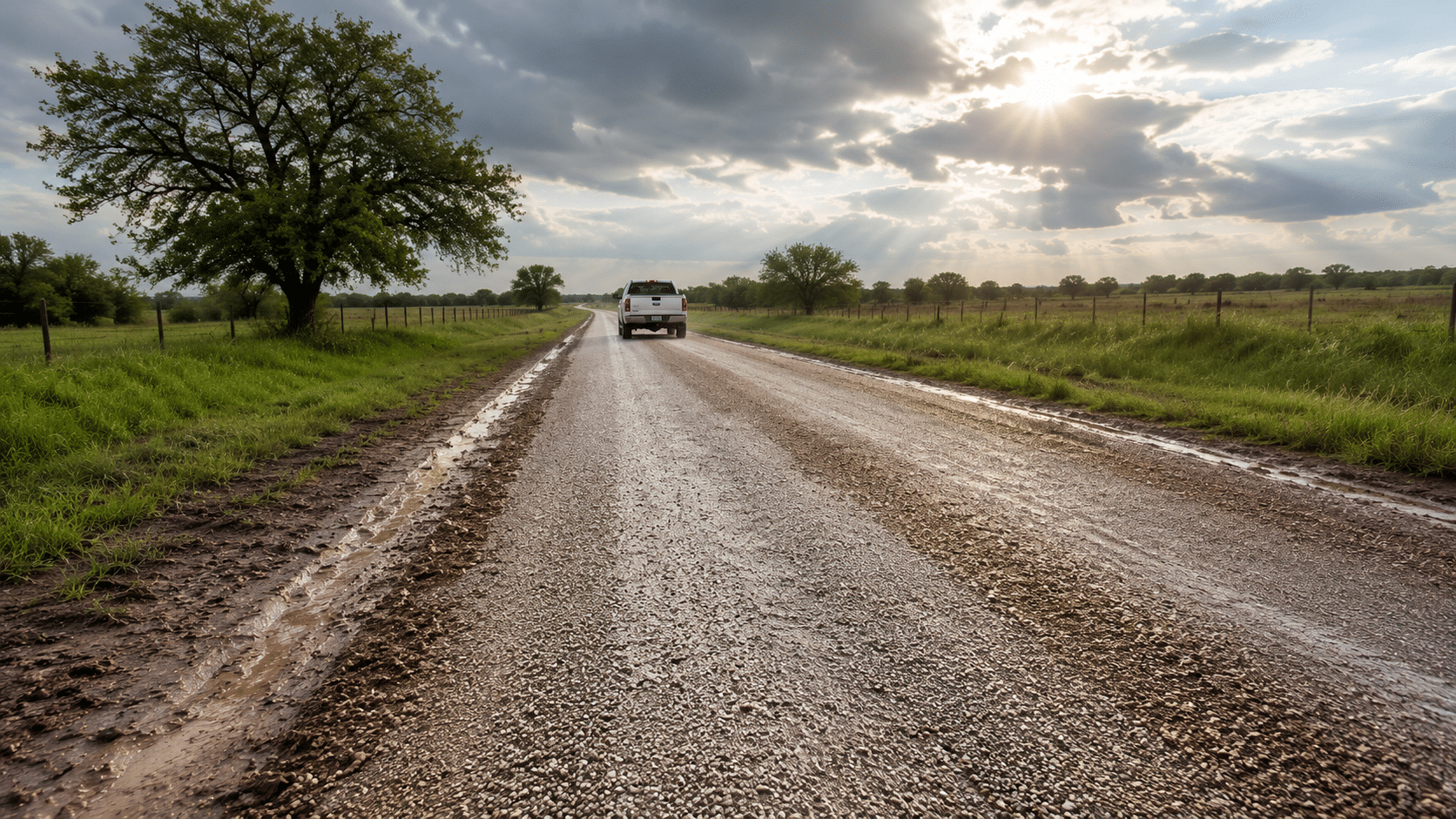
Why Grading and Watering Alone May Not Solve the Problem
Grading is important for restoring crown, smoothing washboards, and moving displaced material back across the road. Watering can temporarily reduce airborne dust. But neither approach automatically creates a stronger surface bond.
If the road material is already losing fines, grading may expose more loose material. If water is used without a stabilizing or binding strategy, the dust reduction may last only until the road dries again. This is why the same road segments can demand attention again and again during dry seasons.
Talk to a Roadway SpecialistCommon signs that the maintenance cycle is repeating
- Dust returns soon after grading or watering.
- Loose aggregate collects along shoulders or in the wheel paths.
- Washboarding forms quickly after traffic resumes.
- Potholes and ruts appear in the same locations after rain events.
- Crews spend increasing time on the same road segments each season.
These conditions do not always mean the road needs reconstruction. They do mean the surface should be evaluated as a system. Material quality, clay content, moisture behavior, drainage, traffic type, and treatment method all affect whether a gravel road can hold together.
What Better Gravel Road Dust Control Requires
Better gravel road dust control starts with keeping the road surface bound, compacted, and resistant to moisture movement. A good program looks beyond the dust cloud and asks why the surface is shedding material in the first place.
Depending on the road, that may involve correcting drainage, restoring the surface shape, improving gradation, adding suitable fines, stabilizing the road base, or applying a treatment designed to bind particles and reduce permeability. The right answer depends on the road material and the maintenance goal.
Hold the Fines
Dust control works better when the surface keeps the fine material needed to bind aggregate together.
Improve Compaction
A denser surface is generally better positioned to resist traffic loosening, rutting, and washboarding.
Manage Moisture
Reducing water intrusion and erosion helps protect the road from wet-weather softening and dry-weather dusting.
This is also where product selection matters. Some dust treatments are mainly temporary suppressants. Others are designed as soil stabilizers that help bind particles, strengthen the road base, and reduce permeability. For counties and municipalities, the most practical option is the one that fits the road condition, application process, equipment availability, traffic load, and maintenance budget.
How Envirotx Supports Gravel Road Dust Control and Soil Stabilization
Envirotx provides roadway and site solutions for construction and maintenance, including dust control and soil stabilization technologies for unpaved roads, road bases, access roads, industrial sites, and municipal infrastructure. For gravel road dust problems, Envirotx helps teams look at the surface condition, not just the visible dust.
Envirotx’s TOP-SEAL WHITE and TOP-SEAL BLACK liquid polymer soil stabilizers are designed to bind, strengthen, and transform the road base into a solid yet flexible surface. According to Envirotx product information, these solutions are used to help reduce dust, mud, base failure, soil erosion, moisture penetration, and permeability while improving road base performance.
Envirotx DCE™ is an enzyme-based soil stabilization technology that bonds soil particles together when blended into suitable soils and properly compacted. It is positioned for counties, DOTs, industrial sites, oilfield operators, developers, and other organizations seeking stronger, lower-maintenance road structures.
Where Envirotx can help public works teams evaluate fit
- Roads where dust returns soon after grading or watering
- Unpaved roads with recurring washboarding, rutting, or potholing
- Gravel surfaces losing fines and becoming difficult to compact
- County and municipal roads that need longer maintenance intervals
- Access roads, industrial roads, and site roads exposed to heavy use
Frequently Asked Questions About Gravel Road Dust Control
What causes dust on gravel roads?
Dust on gravel roads is caused when fine particles loosen from the road surface and become airborne under traffic, wind, and dry weather. Those fines are often part of what helps bind the road surface, so dust can also signal material loss.
Why does dust come back after grading?
Dust comes back after grading when the underlying surface-binding problem has not been solved. Grading can restore shape, but it does not necessarily replace lost fines, improve binding, reduce permeability, or stabilize the road base.
Is gravel road dust only a nuisance?
No. Gravel road dust can affect visibility and nearby properties, but it can also indicate fines loss, weak compaction, surface instability, and recurring maintenance problems.
What is the difference between dust suppression and soil stabilization?
Dust suppression focuses on reducing airborne dust at the surface. Soil stabilization goes deeper by improving the way road materials bind, compact, resist moisture, and carry traffic. Some roads may need temporary suppression, while others need a stabilization strategy.
When should a county or municipality consider a stabilizer?
A county or municipality should consider a stabilizer when the same gravel road segments repeatedly develop dust, washboarding, rutting, potholes, or loose aggregate despite routine maintenance. A roadway specialist can help evaluate whether the road material and conditions are a fit.
Stop Treating Dust Like a Standalone Problem
If gravel road dust keeps coming back, the road may be losing fines, weakening its surface bond, or allowing moisture to undermine performance. Envirotx can help your county, municipality, or public works team evaluate dust control and soil stabilization options that fit the road condition and maintenance goal.
Talk to a Roadway Specialist