
ASPHALT OXIDATION • Pavement Preservation
Why Asphalt Turns Gray and When to Consider Preservation
Gray asphalt is often a warning sign, not just an appearance issue. When black pavement starts to fade, the asphalt binder at the surface may be aging, drying, and losing some of the flexibility that helps hold the pavement together.
For property managers, public works teams, facility managers, and contractors, faded asphalt can be an early preservation trigger. The right response depends on whether the surface is still sound or whether cracking, raveling, drainage problems, or structural damage have already moved the pavement into repair territory.
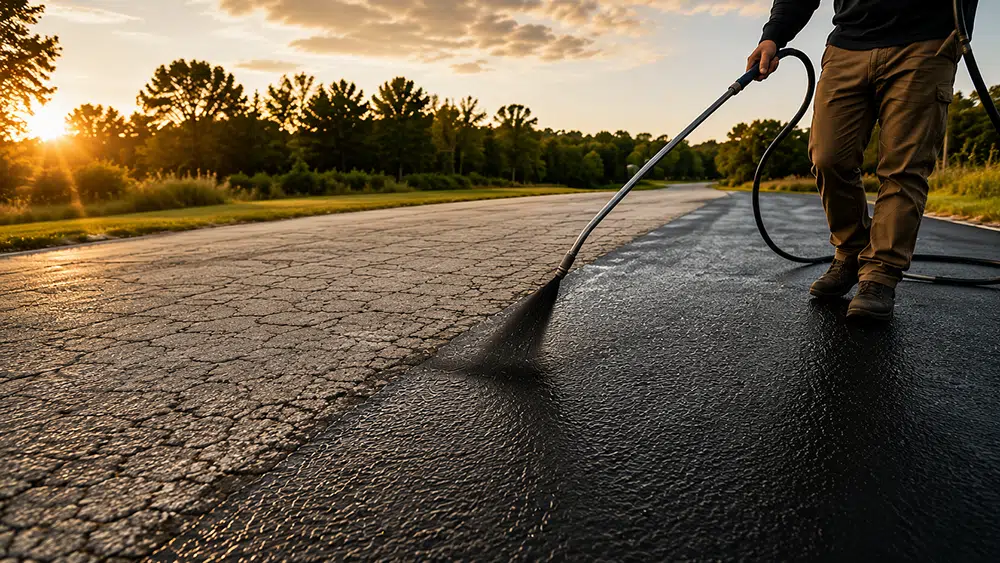
Surface Preservation Timing
What Causes Asphalt to Turn Gray?
Asphalt fades because the surface binder is exposed to sunlight, oxygen, water, traffic, and normal environmental wear. Fresh asphalt looks dark because asphalt binder coats the aggregate at the surface. Over time, that binder can oxidize, dry, and lose its rich black appearance.
Asphalt oxidation is the aging process that occurs as the binder reacts with oxygen and weather exposure. As the binder changes, the pavement surface can become lighter, drier, and less flexible. That is why faded asphalt often looks gray, chalky, or washed out before deeper pavement problems become obvious.
UV and Weather Exposure
Sunlight, heat, rain, and seasonal weather changes can age the binder at the surface.
Binder Drying
As binder loses flexibility, the surface may look dry, brittle, or lighter in color.
Early Surface Wear
Traffic can wear away the exposed binder film and begin loosening fine aggregate.
For parking lots, drive lanes, roadways, airports, commercial properties, and municipal asphalt surfaces, color change is useful because it is easy to see. It gives owners and maintenance teams a practical reason to inspect the pavement before the problem becomes more expensive.
Why Oxidation Matters for Pavement Performance
Faded asphalt matters because binder condition affects surface performance. Asphalt binder helps hold aggregate together, resist environmental wear, and support the pavement surface. When oxidation makes the surface binder brittle, the pavement may become more prone to surface loss.
The early warning signs can be subtle. A surface may still be driveable and structurally useful, but it may start showing a dull gray color, dry texture, minor aggregate exposure, or light surface abrasion. These are the conditions where owners often have the best opportunity to consider preservation before larger repairs are needed.
Ask About EnviroBLACKWhy faded asphalt should be inspected
- It may indicate surface binder aging and loss of flexibility.
- It can appear before more visible cracking or raveling develops.
- It helps maintenance teams identify pavement areas that may need preservation planning.
- It can guide budgeting before full resurfacing or reconstruction becomes necessary.
Oxidation does not automatically mean the pavement has failed. It does mean the surface is changing. A timely inspection can help determine whether the asphalt is a good preservation candidate or whether repairs should come first.
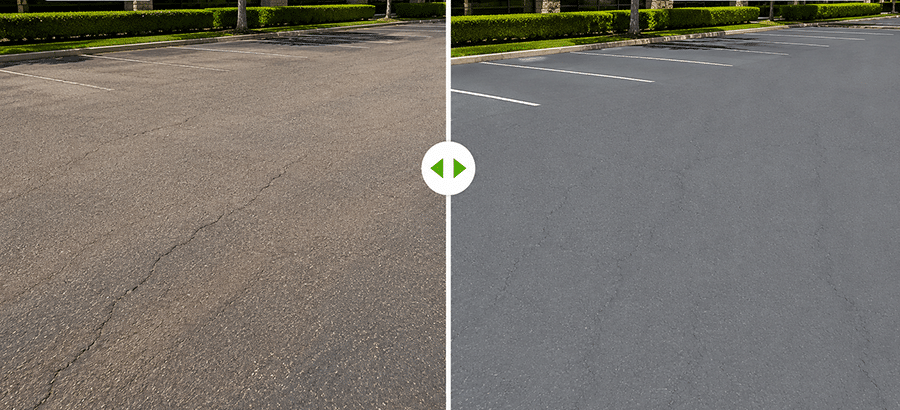
Signs the Surface May Still Be a Preservation Candidate
Faded asphalt may still be a preservation candidate when the surface is oxidized but not severely broken. In practical terms, the pavement should still have a reasonably sound surface, limited loose material, and no major structural failure.
Preservation is usually considered before deterioration becomes severe. The goal is to protect a pavement surface that still has useful service life, not to hide major defects that need repair.
Good signs to look for
- The asphalt has turned gray or dull but is still mostly intact.
- Surface wear is present, but loose aggregate is limited.
- Cracks are minor, isolated, or already planned for repair before treatment.
- Drainage issues are not actively damaging the pavement.
- The owner wants to improve appearance while supporting surface protection.
For property managers and facility teams, this is the point where a surface treatment conversation can be useful. For public works teams and contractors, it is also a chance to evaluate preservation as part of a planned maintenance cycle rather than waiting for reactive repairs.
When Faded Asphalt May Require Repair Instead
Gray asphalt may need repair before preservation when the pavement surface is no longer sound. A surface treatment should not be used as a substitute for correcting potholes, severe cracking, base failure, standing water, or widespread raveling.
If the pavement is shedding aggregate, holding water, cracking in interconnected patterns, or showing depressions and movement under traffic, the owner should address those conditions first. Treating a failed surface can improve color temporarily, but it will not correct the underlying pavement problem.
Repair may be needed first when you see:
- Potholes, broken edges, or large failed areas
- Widespread raveling or loose aggregate
- Alligator cracking or signs of base movement
- Drainage problems that leave water on the pavement
- Cracks that need filling or sealing before surface treatment
The key is to match the treatment to the pavement condition. Faded asphalt can be a preservation trigger, but the surface still needs to be evaluated before deciding what product or repair sequence makes sense.
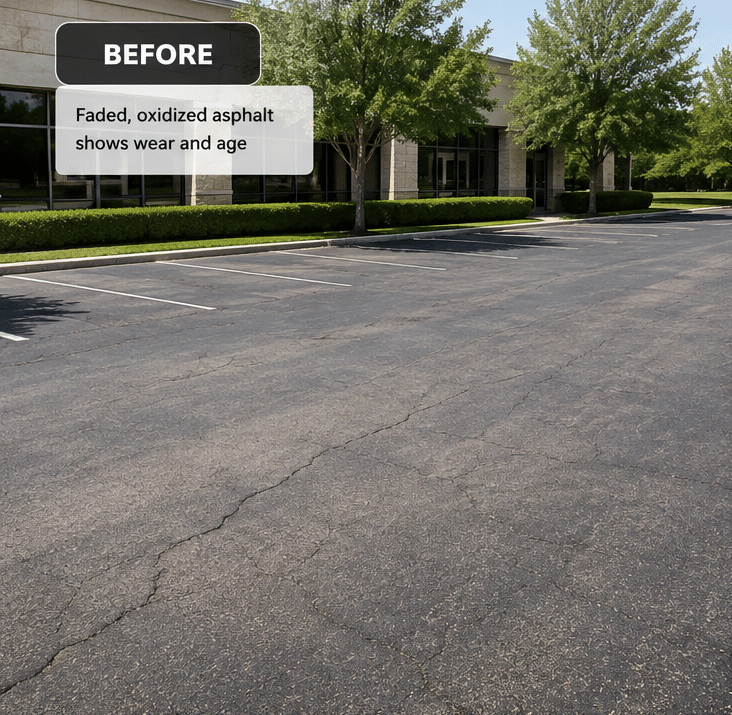
How EnviroBLACK Supports Surface Preservation
EnviroBLACK is Envirotx’s advanced emulsified fog seal for asphalt surface preservation, visual restoration, and breathable protection. It is a polymer-modified asphalt emulsion designed to bond with asphalt, restore a deep black appearance, and help protect the pavement surface from environmental wear.
What makes EnviroBLACK different from appearance-only treatments is its preservation-focused design. Traditional seal coats can sit on top of the pavement surface and may trap moisture or heat. EnviroBLACK is designed to penetrate and integrate with the asphalt surface while allowing moisture vapor to escape.
Restores Dark Appearance
EnviroBLACK helps restore a rich black finish to faded and oxidized asphalt surfaces.
Supports Surface Protection
The product is designed to protect asphalt from environmental wear while supporting preservation goals.
Allows Vapor Release
Its breathable design helps the pavement release moisture vapor rather than sealing moisture in.
EnviroBLACK is built for asphalt surfaces where appearance, protection, breathability, and return to service all matter. It can be used for parking lots, roadways, driveways, airports, commercial properties, and municipal pavement assets, depending on project conditions.
Frequently Asked Questions About Asphalt Oxidation and Faded Asphalt
Why does asphalt fade?
Asphalt fades because the surface binder is exposed to oxygen, sunlight, moisture, traffic, and weather. Over time, asphalt oxidation can dry and age the binder, causing the surface to lose its deep black color and turn gray.
Is gray asphalt always damaged?
No. Gray asphalt is not always structurally damaged. It may still be a good preservation candidate if the surface is mostly intact, drainage is acceptable, and major cracking, raveling, or base failure is not present.
When should owners treat asphalt before deeper repairs are needed?
Owners should consider preservation when asphalt is faded, dry-looking, or lightly worn but still structurally sound. This is often the window where surface protection can help support longer pavement performance before more disruptive repairs are needed.
What makes EnviroBLACK different from appearance-only treatments?
EnviroBLACK is designed as an advanced emulsified fog seal that penetrates and integrates with asphalt instead of simply sitting on top of the surface. It restores dark appearance while supporting breathable surface protection.
Can EnviroBLACK fix potholes or severe cracking?
No. Potholes, severe cracking, widespread raveling, and structural pavement problems should be repaired before a preservation treatment is considered. EnviroBLACK is intended for surface preservation, not structural reconstruction.
Ask Envirotx if Your Asphalt Surface Is a Fit
If your parking lot, roadway, facility pavement, or municipal asphalt surface is turning gray, Envirotx can help you evaluate whether it is still a preservation candidate. Ask about EnviroBLACK to learn whether breathable surface protection is the right next step before bigger repairs are needed.
Request EnviroBLACK Information