
TOP-SEAL WHITE • Pavement Failure Prevention
Most Pavement Failures Start Below the Surface: Subgrade Basics
Pavement failure rarely starts where people first notice it. Cracks, potholes, rutting, pumping, dust, erosion, and surface deformation show up at the top, but the cause is often deeper. In many roadways, industrial yards, oilfield roads, parking areas, and low-volume access routes, the real problem begins in the subgrade or base.
Liquid Polymer Soil Stabilizer
Why Pavement Failures Start Below the Surface
Long-term pavement performance depends on more than the asphalt or concrete surface. A road is a system. If the foundation cannot carry load, manage moisture, and resist movement, the surface layer eventually reflects that weakness.
For public works teams, engineers, contractors, and private owners, understanding subgrade basics is one of the most important steps in lowering lifecycle cost. Stabilizing the foundation before surface failure occurs can reduce maintenance frequency, improve performance, and help avoid the expensive cycle of repeated overlays, patches, and reconstruction.
Envirotx’s TOP-SEAL WHITE Liquid Polymer is designed for this foundation-focused approach. It is an all-purpose liquid soil stabilizer and additive that binds and transforms the base into a solid, yet flexible mass that resists fracturing, helps prevent base failure, reduces dust and erosion, increases soil strength, and reduces permeability.
Reduce Base Failure
Address weak subgrade and base conditions before cracks, rutting, and potholes return.
Control Moisture
Improve resistance to moisture intrusion, pumping, erosion, and soft spots.
Lower Lifecycle Cost
Stabilize the foundation to reduce repeated grading, patching, overlays, and emergency repairs.
What Subgrade and Base Layers Actually Do
The subgrade is the prepared soil beneath the pavement structure. The base is the engineered layer placed above it, typically made from aggregate, stabilized material, or another load-distributing section.
Together, these layers are responsible for supporting traffic loads, distributing wheel loads, managing moisture, reducing movement, and creating a stable platform for asphalt, concrete, gravel, or surface treatments.
A strong surface cannot compensate for a weak foundation forever. When the subgrade is too wet, too plastic, poorly compacted, or inconsistent, the pavement begins to move under traffic. That movement may be small at first, but repeated loading magnifies the problem.
TOP-SEAL WHITE is positioned for these conditions because it is used to bind the base, reduce permeability, and improve soil strength. Envirotx notes that it can replace Portland cement and lime for in-depth stabilization in certain applications.
Surface Warning Signs That Point to Subgrade Failure
Not every crack is a subgrade problem, but certain surface distresses should immediately raise foundation concerns. These pavement failure warning signs often indicate that the pavement structure is moving under load, holding too much moisture, or losing support below the surface.
Rutting and Wheel-Path Depressions
Rutting often shows that the pavement structure is deforming under repeated traffic loading, especially when the base or subgrade cannot provide stable support.
Alligator Cracking
Interconnected cracking may indicate fatigue failure caused by movement, weak support, or repeated loading over an unstable foundation.
Potholes That Return After Repair
Recurring potholes often mean the surface patch is treating the symptom while the underlying base or subgrade problem remains unresolved.
Pumping, Soft Spots, or Wet Areas
Water movement, poor drainage, and saturated soil can weaken the pavement foundation and accelerate surface distress.
Dust, Mud, Erosion, and Aggregate Loss
On gravel roads, oilfield roads, rural access routes, industrial yards, and unpaved roads, recurring dust in dry weather and mud in wet weather are especially important warning signs. These conditions can point to moisture sensitivity, surface instability, erosion, and base material loss.
Why Asphalt Overlays Fail When the Foundation Is Weak
An overlay can improve ride quality and restore surface appearance, but it does not fix a weak foundation. If the subgrade or base is unstable, the new asphalt layer simply becomes the next surface to crack, rut, or deform.
This is called reflective failure. The underlying weakness moves upward through the pavement system. Cracks return. Rutting reappears. Patches break apart. Low areas hold water again. The owner pays for a new surface but does not solve the load-support problem beneath it.
That is why proper evaluation matters before overlay work. If the pavement has isolated surface wear, surface preservation may be appropriate. But if the failure pattern indicates poor support, moisture sensitivity, high plasticity soil, erosion, or base instability, stabilization should be considered before resurfacing.
Soil Stabilization Options and When to Use Them
Soil stabilization is the process of improving existing soil or base material so it can better support traffic and resist moisture-related deterioration.
Common approaches include mechanical stabilization, cement treatment, lime treatment, polymer-based stabilization, and improved moisture-control strategies. Mechanical stabilization may involve blending aggregate or improving gradation. Cement and lime can be effective when soil chemistry and project requirements support their use.
Polymer-based technologies can help bind particles, reduce permeability, control dust, and improve surface or base performance depending on the product and application.
TOP-SEAL WHITE is a polymer-based emulsion that requires water dilution. Envirotx describes it as non-petroleum-based, eco-friendly, VOC-free, easy to apply, and capable of opening to traffic immediately in applicable conditions.
The right option depends on soil type, moisture conditions, traffic loading, treatment depth, budget, environmental constraints, and long-term maintenance goals. The best stabilization plan starts with understanding the material being treated.
What to Test Before You Treat a Failing Pavement Foundation
Before selecting a stabilization method, the project team should understand what kind of material they are working with. Testing helps determine whether the existing soil or base can support expected traffic loads and whether stabilization is needed before resurfacing.
Moisture Content
Wet soils can lose strength quickly under traffic. Moisture testing helps identify whether water is contributing to rutting, pumping, soft spots, or base instability.
Plasticity Index
High-plasticity soils can swell, shrink, and move with moisture changes, creating pavement movement that eventually reflects at the surface.
Gradation and Density
Gradation, density, and compaction results help determine whether the base material can create a stable, load-distributing platform.
Strength and Drainage
Strength testing and drainage observations help identify whether water is entering, staying in, or moving through the pavement structure.
Field observations are just as important as lab data. Standing water, poor shoulder drainage, soft areas after rainfall, pumping, erosion, rutting, and repeated failures in the same locations all point to foundation problems that should be addressed before a new surface is placed.
Contractor Execution Basics for Soil Stabilization
Even the right stabilization product can underperform if execution is poor. Contractors should control treatment depth, mixing, moisture, application rate, compaction, and finished drainage.
Control Treatment Depth
Depth matters because the treatment must reach the layer causing the problem. Stabilizing only the surface will not correct deeper base or subgrade movement.
Maintain Consistent Mixing
Mixing matters because uneven distribution creates inconsistent performance across the treated area.
Manage Moisture and Application Rate
Moisture matters because stabilization products often depend on proper dilution, dispersion, curing, and compaction conditions.
Document Field Conditions
Contractors should document weather conditions, dosage, dilution, area treated, equipment used, compaction effort, before-and-after photos, and field performance notes.
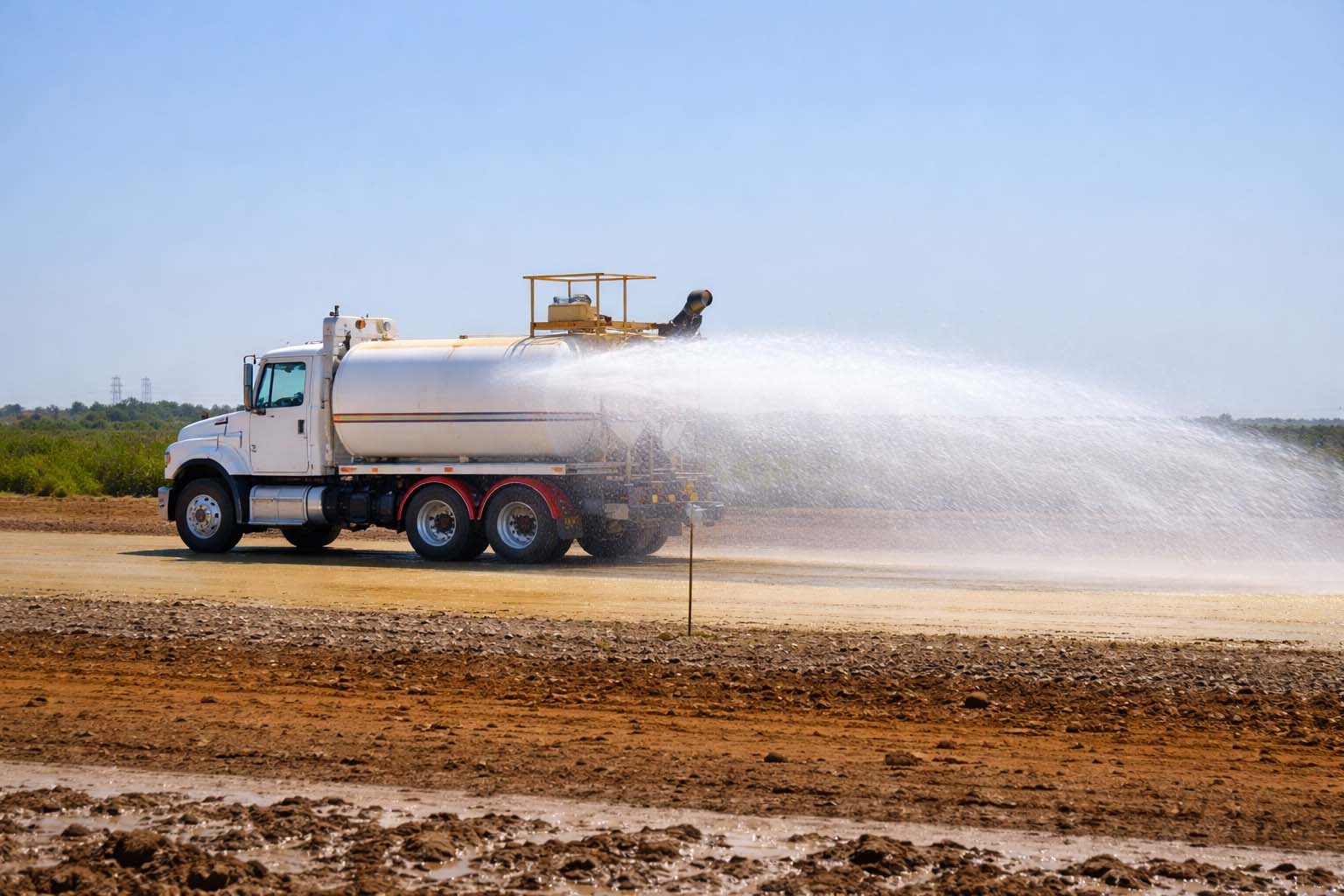
For TOP-SEAL WHITE, application can be as simple as diluting the product in a water truck and applying it. That makes it practical for roadways, yards, access routes, and operational environments where downtime is a major concern.
How Stabilization Lowers Pavement Lifecycle Cost
Stabilization lowers lifecycle cost by addressing the cause of failure instead of repeatedly treating the symptom.
A weak base creates a recurring maintenance cycle: grade it, patch it, overlay it, repair it again, and eventually reconstruct it. Each repair may seem manageable in isolation, but the cumulative cost can exceed the cost of stabilizing the foundation earlier.
A stabilized base can help reduce dust, mud, erosion, rutting, moisture intrusion, aggregate loss, recurring surface failure, emergency repairs, and operational downtime. In industrial, oilfield, municipal, and commercial settings, those benefits can translate into fewer complaints, fewer disruptions, better access, and a more predictable maintenance budget.
Build Smarter Pavement Maintenance Plans From the Foundation Up
Most pavement failures start below the surface. The smartest maintenance plans do too.
When cracks, potholes, rutting, pumping, dust, erosion, and recurring repairs keep showing up, the surface may only be showing the symptoms. The real issue may be poor load support, moisture-sensitive soil, base instability, weak compaction, or subgrade movement.
By evaluating the foundation before applying another overlay or surface repair, owners and contractors can make better decisions, reduce repeat failures, and improve long-term pavement performance.
Stop Repeating Surface Repairs on Weak Pavement Foundations
TOP-SEAL WHITE helps stabilize soil and base materials so roads, yards, access routes, and pavement structures can better resist moisture, rutting, dust, erosion, and recurring surface failure.
Request a Stabilization Quote