
How to Prevent Washouts, Rutting, and Failures on Gravel Service Roads
Gravel service roads are the backbone of rural and industrial infrastructure. From oilfield lease roads and mining access routes to agricultural corridors and industrial facilities, these roads must support heavy loads, variable traffic, and harsh environmental conditions—often with limited maintenance budgets. Unfortunately, washouts, rutting, and premature failures are common on gravel service roads, disrupting operations, increasing costs, and creating safety concerns.
On this page Tap to collapse
Why Gravel Service Roads Fail
Unlike urban pavements, gravel service roads are often constructed under challenging conditions:
- Poor or highly reactive subgrade soils
- High moisture exposure and inadequate drainage
- Heavy, repetitive truck and equipment loads
- Tight construction schedules
- Limited access to asphalt or concrete
When traditional construction methods are applied without accounting for these realities, failures occur quickly. The most common problems include washouts from water infiltration, rutting due to unstable bases, and structural failures caused by weak or chemically reactive soils.
Preventing these issues requires a smarter approach that starts below the surface and continues through long-term preservation. Understanding why gravel service roads fail—and how to prevent those failures—can dramatically improve performance, reduce downtime, and extend service life.
Stop water before it weakens the structure and causes erosion or pumping.
Improve load distribution to prevent deformation and rut development.
Address hidden soil issues before they become repeated failures.
Common Causes of Washouts
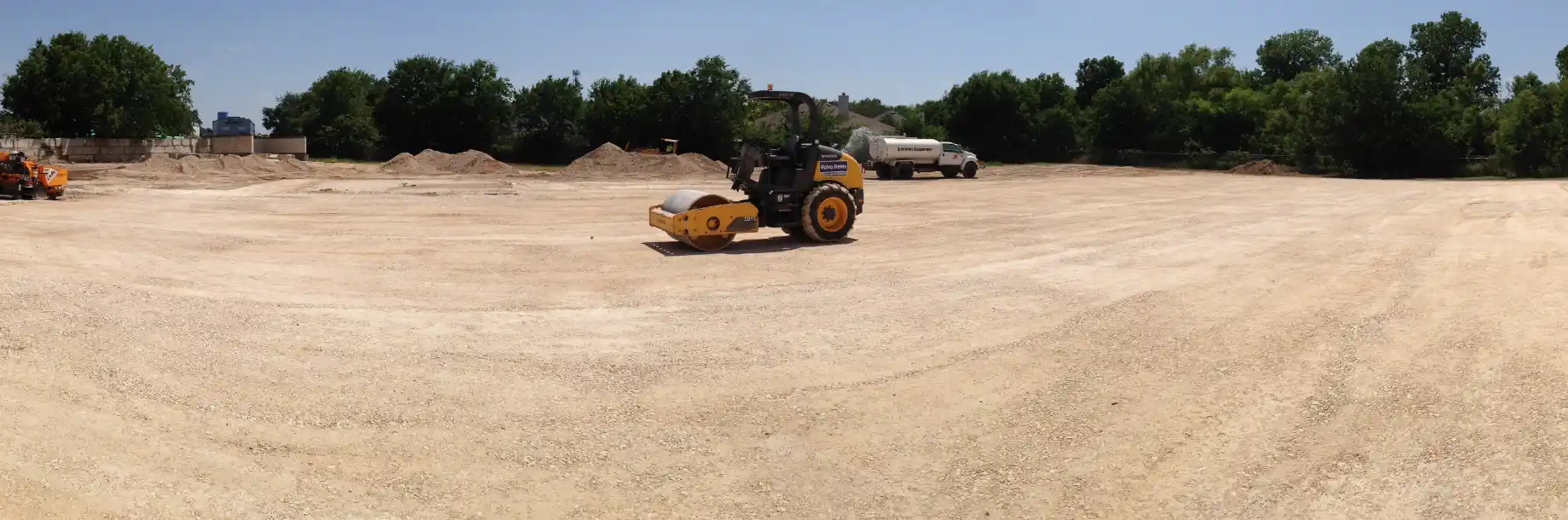
- Poor surface drainage or lack of crown
- Inadequate edge containment
- Unstabilized, permeable base materials
- Heavy rainfall or flooding events
Prevention Strategies
Effective washout prevention starts with managing water before it enters the roadway. Proper grading, surface shaping, and drainage design are critical—but treating the materials themselves is equally important.
Stabilized subgrades and bases resist erosion, reduce permeability, and maintain strength even when saturated. Modern ambient-temperature stabilization technologies can significantly improve moisture resistance and load-bearing capacity without the cost and logistics of hauling lime or cement.
Rutting: A Sign of Structural Weakness
Rutting is a clear indicator that a gravel service road lacks sufficient structural capacity to handle traffic demands. Heavy trucks, slow-moving equipment, and repeated turning movements place concentrated stress on unbound or poorly stabilized surfaces.
Why Rutting Occurs
- Insufficient compaction
- Weak or moisture-sensitive aggregates
- High plasticity (Hi-PI) soils
- Poor load distribution
As ruts deepen, they trap water, accelerating deterioration and leading to potholes, soft spots, and additional failures.
How to Prevent Rutting
Preventing rutting requires strengthening the entire road structure—starting with the subgrade. Stabilization technologies that bind soil and aggregate particles reduce deformation and improve load distribution.
For many gravel service roads, enhanced aggregate bases treated with advanced modifiers can outperform thicker, untreated sections while lowering material volumes and overall construction costs.
Subgrade Failures: The Hidden Cause
Many failures on gravel service roads originate in the subgrade and remain hidden until major damage occurs. High plasticity clays, expansive soils, and chemically reactive materials—such as those prone to ettringite formation—are common in rural and industrial areas.
Warning Signs
- Pumping or soft areas
- Repeated repairs in the same locations
- Seasonal heaving or settlement
- Rapid loss of strength after rainfall
Washouts: The Role of Water and Drainage
Washouts are among the most destructive failures affecting gravel service roads. They occur when water infiltrates the roadway structure, eroding fine particles and weakening the base or subgrade.
Request a Quote
Gravel Road Stabilization: Ambient-Temperature Construction
Ambient-temperature construction and maintenance technologies are well suited for gravel service roads, particularly in remote or weather-sensitive locations. These solutions eliminate the need for heating materials, reducing emissions, fuel use, and logistical challenges.
Key benefits include:
- Faster construction and reopening
- Lower carbon footprint
- Improved jobsite safety
- Greater flexibility across weather conditions
Proactive Maintenance vs. Reactive Repairs
Many gravel service roads fall into a costly cycle of reactive maintenance—waiting for failures, then repeatedly patching them. This approach increases lifecycle costs and disrupts operations.
Proactive Strategies That Work
- Routine roadway condition surveys
- Early stabilization of weak sections
- Surface preservation treatments
- Drainage improvements before failure
Professional-grade roadway surveys and monitoring programs allow owners to identify issues early, prioritize investments, and significantly extend road life.
Building Gravel Service Roads That Last
Preventing washouts, rutting, and failures on gravel service roads requires a holistic approach that integrates design, materials, construction methods, and ongoing management. By focusing on subgrade performance, moisture control, and innovative stabilization technologies, owners can reduce long-term costs while improving reliability.
Gravel service roads don’t need to be overbuilt—but they do need to be built smarter. With the right strategies in place, these critical roadways can deliver consistent performance under the most demanding conditions.
Get a Quote
Ready to prevent washouts, rutting, and repeat failures?
Tell us your site conditions, traffic demands, and problem areas—we’ll recommend the right stabilization approach.
Request a Quote