
Gravel Road Stabilization for Longer Lasting Conditions
Gravel roads play a critical role in supporting transportation, industry, agriculture, and commercial activity across rural and industrial regions. Whether they provide access to oil and gas sites, wind and solar farms, agricultural operations, or county-maintained rural routes, these roads must withstand heavy truck traffic, seasonal weather, and constant environmental stress. Yet, many gravel roads fail prematurely—not because of the surface layer itself, but because the underlying soils and construction methods were not engineered for longevity.
On this page Tap to collapse
Understanding the Soil: The Foundation of Every Long-Lasting Gravel Road
The performance of a gravel road is determined long before the first load of aggregate is delivered. Soil type, moisture content, plasticity, and structural strength dictate how well the road will hold up under heavy traffic and environmental exposure.
High Plasticity (PI) Clays
Many regions—especially Texas, Oklahoma, and the broader central U.S.—contain expansive clay soils with high PI values. These soils absorb water, expand, shrink as they dry, and ultimately weaken the road structure. Left untreated, they cause:
- Rutting and deformation
- Soft, pumping subgrades after rainfall
- Rapid pothole development
- Loss of surface aggregate
- Repeated maintenance cycles
Video Player
Loose, Sandy Soils
In contrast, sandy soils lack cohesion. They shift under load and offer little support, leading to road instability and washboarding.
Moisture-Sensitive or Sulfate-Rich Soils
Some soils react negatively with traditional stabilizers such as lime or cement, leading to issues like 3-D swell and ettringite formation. These reactions can destroy a road from below, regardless of surface treatment.
For gravel roads to be long-lasting, the soil must be understood and treated—not ignored. Modern engineering practices, coupled with advanced soil stabilization technologies, make it possible to build strong, resilient roads even on the most challenging ground.
The foundation of every long-lasting gravel road starts below the surface.
Stabilizing the existing soil creates a firm, durable foundation that greatly reduces maintenance needs.
Modern engineering practices make it possible to build strong, resilient roads even on challenging ground.
Stabilizing the Subgrade: The Key to Long-Term Performance
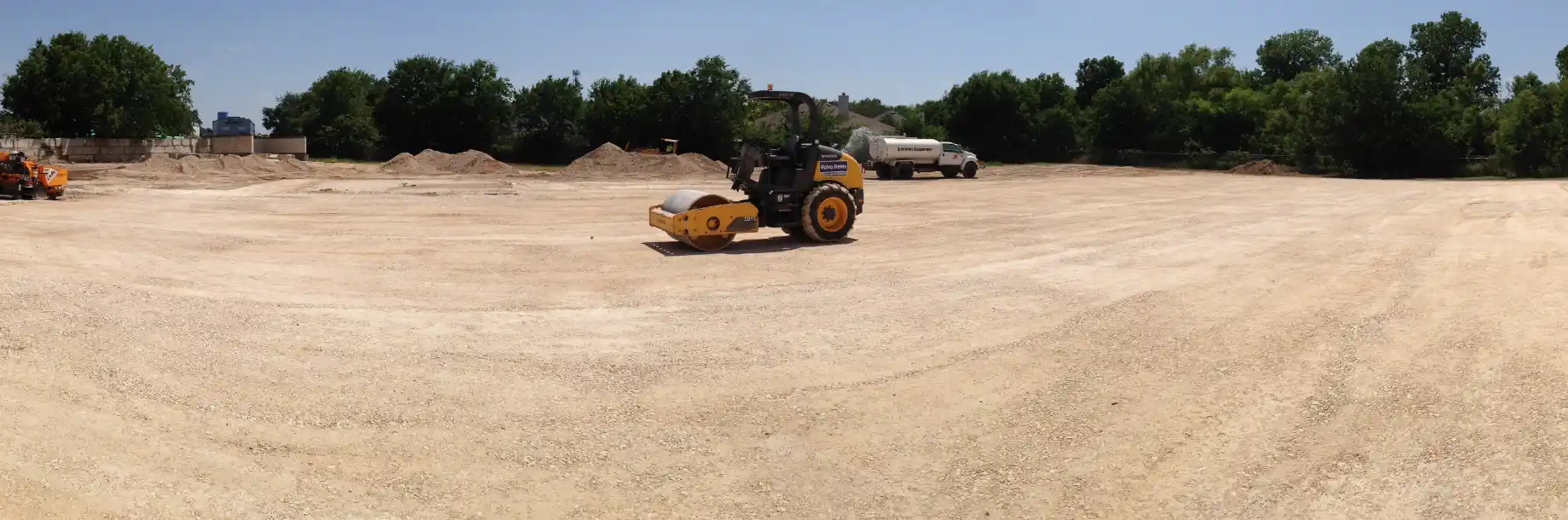
A long-lasting gravel road begins with a stable, well-engineered subgrade. Poor subgrades can’t support heavy trucks, leading to endless grading, re-graveling, and emergency repairs. Stabilizing the existing soil creates a firm, durable foundation that greatly reduces maintenance needs.
Cut Water Usage in Mining Operations
Why Stabilization Matters
Stabilization increases:
- Bearing capacity
- Resistance to moisture
- Structural strength
- Road uniformity
- Traffic load tolerance
By addressing the soil before aggregate placement, road owners can extend the life of a gravel road by many years while dramatically reducing maintenance costs.
Gravel Road Stabilization
Innovative Stabilization Technologies
Traditional materials (lime, cement, fly ash) are not always ideal. They may struggle with high-PI clays, may require strict moisture controls, or may generate undesirable soil reactions.
Innovative technologies—such as environmentally friendly polymer-based stabilizers, bio-enzymes, and synthetic liquid additives—deliver improved performance with:
- Lower carbon footprint
- Compatibility with a wider range of soils
- Faster curing
- Reduced equipment needs
- Superior resistance to moisture and traffic loads
These solutions are especially valuable for access roads used by oversized trucks, heavy equipment, and continuous industrial operations.
Request a Quote
Engineering the Base Layer for Long-Lasting Gravel Roads
Once the subgrade is stabilized, attention shifts to the base. A properly structured base distributes loads and prevents rutting, potholes, and material loss.
Key Elements of a Strong Base Layer
Proper Thickness
Base thickness should reflect anticipated traffic loads and soil strength. Heavy haul access roads require more robust base design than light rural residential roads.
Well-Graded Aggregate
A mix of coarse and fine materials creates interlocking strength. Proper gradation prevents displacement and improves compaction.
Optimal Moisture Control
Moisture is critical for compaction. Too much or too little compromises density and long-term performance.
Advanced Stabilizers for Added Strength
Polymer or enzyme-based stabilizers can be blended into the base to improve cohesion, reduce dust, and enhance load-bearing capacity.
Best Practices for the Surface Layer
Use high-quality, durable aggregate.
Maintain a proper crown (typically 4–6%) to shed water.
Ensure adequate drainage on both sides of the roadway.
Rework washouts or ruts immediately to prevent deeper failures.
A well-maintained surface layer is crucial, but it only performs long-term when the foundation beneath is engineered correctly.
The Role of Dust Control in Road Longevity
Dust isn’t just a nuisance. Uncontrolled dust indicates a loss of fine particles essential to aggregate binding. As fines leave the road:
- Gravel loosens
- Rutting accelerates
- Washboarding forms
- Maintenance costs increase
Building Long-Lasting Gravel Roads Is an Investment That Pays Off
When gravel roads fail, most stakeholders assume the solution is more grading, more rock, and more labor. But these “quick fixes” rarely address the underlying cause. By engineering the soil, stabilizing the subgrade, selecting high-quality materials, and incorporating modern dust control solutions, organizations can achieve gravel roads that last years longer with a fraction of the maintenance.
Benefits include:
- Lower lifecycle costs
- Fewer road closures
- Improved safety
- Better support for heavy truck traffic
- Enhanced sustainability
- Reduced fuel, labor, and aggregate consumption
Whether you’re a DOT, county, oilfield operator, industrial facility, or commercial developer, the path to long-lasting gravel roads starts with smarter soil and base engineering—not just surface repairs.